
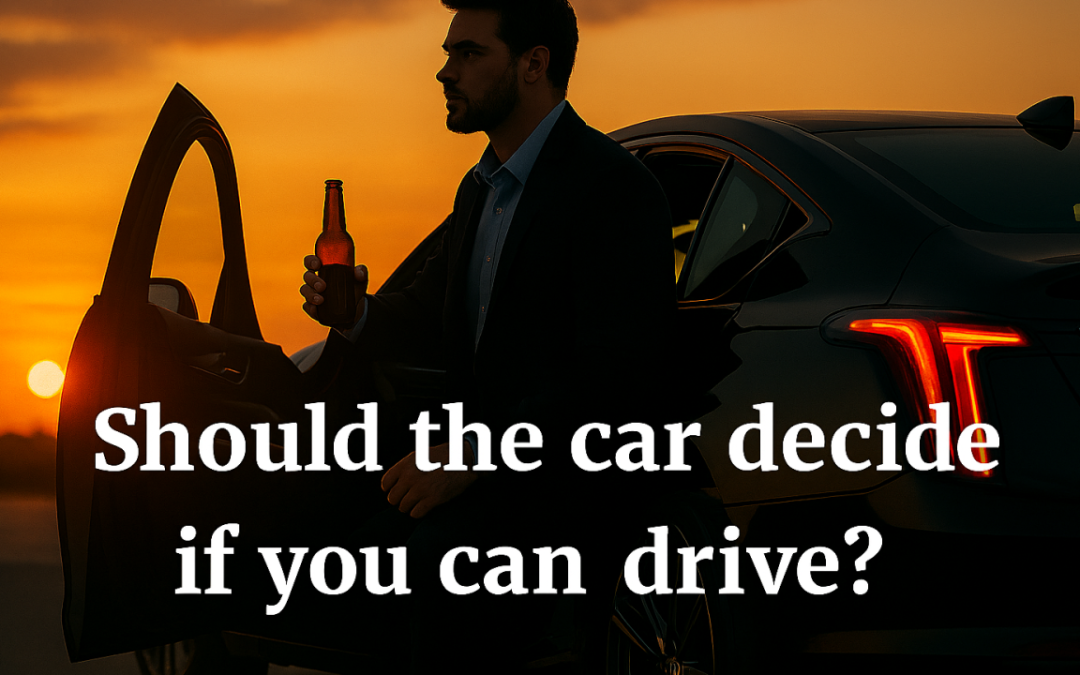
It starts quietly—like most revolutions do.
A clause in a federal law. A sensor in a steering wheel. A camera tucked above the dashboard.
And, long before most drivers realized it, another shift had already begun—one not written into law but embedded in software: the car as a collector of personal data.
That reality burst into public view not through legislation, but through a lawsuit.
A Lawsuit That Changed the Conversation
In recent months, a series of legal actions against General Motors and its OnStar subsidiary exposed a practice that many drivers never fully understood.
According to federal regulators and court filings, GM collected detailed information from vehicles—precise location data, speed, braking patterns, acceleration, and other driving behaviors—sometimes as frequently as every three seconds. [cambridge.org]
The data did not remain inside the car.
Authorities allege it was sold to third-party data brokers, including LexisNexis Risk Solutions and Verisk Analytics, which then used it to create risk profiles for insurance companies. [niaaa.nih.gov], [natlawreview.com]
Drivers, regulators said, were often not clearly informed or did not meaningfully consent to this use of their data. [cambridge.org]
The consequences were tangible. Some consumers reported rising insurance premiums tied to their driving behavior, tracked and quantified without their knowledge. [natlawreview.com]
The fallout has been significant:
- A $12.75 million settlement with California regulators [niaaa.nih.gov]
- A Federal Trade Commission order banning GM for five years from selling such data to consumer reporting agencies [dallasobserver.com]
- A sweeping federal lawsuit, with more than 40 claims allowed to proceed, alleging unlawful data collection and sale [nhtsa.gov]
The case has become a landmark—not just for one company, but for an entire industry.
Because it revealed something essential:
The modern car is no longer just a machine. It is a data platform.
A Policy Built on Safety
At the same time, the federal government has been quietly pursuing a parallel goal.
In 2021, Congress passed legislation directing regulators to require that all new vehicles eventually include advanced impaired-driving detection systems—technology capable of identifying intoxicated or impaired drivers and preventing the vehicle from operating. [trafficsaf…report.com]
The motivation is clear:
- 12,429 Americans were killed in alcohol-related crashes in 2023 alone [hemmings.com], [theautochannel.com]
- Roughly one-third of all traffic deaths involve impairment [hemmings.com]
- The societal cost reaches into the hundreds of billions of dollars annually [wp.nyu.edu]
For safety advocates, the promise of these systems is transformative: a car that intervenes before a tragedy occurs.
The Technology That Makes It Possible
To achieve this, vehicles must do something new.
They must watch the driver.
Engineers are developing systems that can:
- Track eye movement and attention with interior cameras
- Measure driving behavior patterns such as lane drift or delayed reactions
- Detect alcohol levels through breath sensors in the cabin or touch-based systems in the steering wheel [apnews.com]
These technologies build on a foundation already widespread:
- Many advanced safety features now appear in over 90% of new vehicles [lifesafer.com]
- Driver monitoring systems are increasingly common, both in vehicles and insurance-linked programs [crashstats…sa.dot.gov]
But the transition is not just technological.
It is conceptual.
Cars are evolving from passive tools into active systems—capable not only of observing but of acting.
Where Safety Meets Surveillance
The OnStar case casts a long shadow over this transition.
Because the same categories of data required for safety—location, behavior, real-time monitoring—are the ones already shown to have commercial value.
In the lawsuit, plaintiffs allege that driving data was:
The legal claims include violations of federal wiretap laws, invasion of privacy, and unjust enrichment. [ntsb.gov]
Regulators have emphasized just how revealing this data can be:
Precise geolocation records can expose daily routines, personal habits, and even sensitive activities, such as visits to medical facilities. [cambridge.org]
In other words, the data generated by modern vehicles is not merely technical.
It is deeply personal.
A Technology Not Yet Ready
Even as the legal battle unfolds, the federal safety mandate faces its own challenges.
Regulators have acknowledged that the impaired-driving detection systems envisioned by law are not yet ready for widespread deployment. [baclevels.com]
Accuracy remains a central issue.
Even extremely precise systems could still generate millions of false detections annually when applied across the entire driving population. [baclevels.com]
The result is a cautious rollout—and a recognition that the stakes are not just technical, but social.
The Emerging Question: Who Controls the Data?
The convergence of these two developments—the OnStar litigation and the federal mandate—has brought a new question to the forefront:
If cars must collect data to protect lives, who controls that data—and how is it used?
The OnStar case suggests one possible outcome:
- Data becomes a commodity, traded among corporations
- Consumers have limited visibility into how it is used
- Financial consequences, such as insurance rates, are shaped by invisible systems
The new federal technology could expand that data stream significantly.
A Turning Point in the Relationship Between Driver and Machine
For more than a century, the automobile has been defined by independence.
A private space. A personal machine. A symbol of control.
That definition is changing.
Cars now:
- Observe their drivers
- Record behavior
- Share information beyond the vehicle itself
And soon, they may also:
- Intervene, preventing the vehicle from operating under certain conditions
What Comes Next
The outcome is still unclear.
Courts will determine the limits of data use and consent in the OnStar case. Regulators will decide how and when impaired-driving technology becomes mandatory. Consumers will ultimately decide how much surveillance they are willing to accept in exchange for safety.
But the direction is unmistakable.
Final Thought
It starts quietly—like most revolutions do.
A safety feature. A data stream. A lawsuit that reveals what was previously invisible.
And then, gradually, the shift becomes undeniable.
The car is no longer just a vehicle.
It is an observer. A recorder. And, increasingly, a decision-maker.
The question is no longer whether it can watch you.
It already does.
The question is what happens to what it sees.
Is this where we draw the line—or just the beginning of a new one? If technology can assess impairment more accurately than we can ourselves, should it intervene, or does that cross into something more profound? At what point does enhancing safety begin to erode personal agency—and are we ready to let our machines make those judgment calls for us?